Boutique Dining Experiences That Combine Art, Wellness, and Cuisine
June 5, 2026
Why Every Professional Should Have a Creative Hobby?
August 6, 2026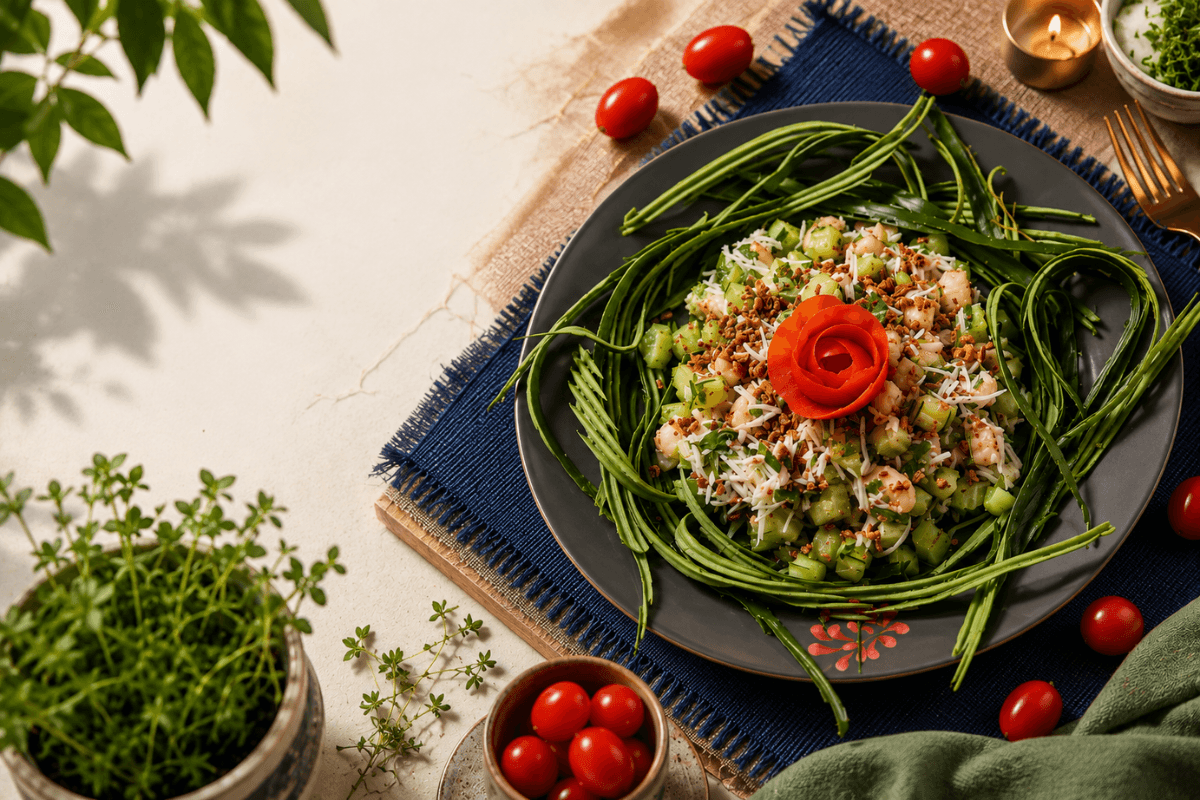
More Than a Meal: How Food Presentation Shapes the Way We Eat.
Before a single bite touches your tongue, your brain has already started forming an opinion about your meal. The colours on the plate, the negative space around a dish, and the way a sauce is dragged or dotted all prime your palate. Food presentation is equal parts decorative, communicative, and sensory.
These realities are exemplified in the way many cultures have adopted their presentational styles as ritual.
The Plate as a First Impression
Studies on what researchers call “visual seasoning” have found something strange: identical dishes are rated as sweeter, fresher, or more flavourful purely based on how they’re arranged. A scoop of ice cream on a white plate tastes different to us than the same scoop in a colourful bowl. The ice cream may not have changed, but our expectations did. This isn’t superficial. Your brain evaluates food attractiveness in a fraction of a second, and that snap judgment shapes how satisfying the meal feels, how much you’re willing to pay for it, and even how full you feel afterwards. Chefs know this. That’s why fine dining leans so heavily on negative space. A precisely portioned and arranged dish doesn’t just look elegant; it also signals planning, quality, and most of all, care, hallmarks of any luxury dining experience.
Presentation isn’t limited to sight. The sizzle of a fajita platter, the crack of a crème brûlée shell, and the aroma released when the lid comes off a tagine at the table reveal that presentation is a multisensory event.
In that sense, a chef’s job extends beyond cooking; they must compose an entire sensory dining experience.
Presentation as Storytelling
A plate can tell you something about the person who made it. Minimalist plating suggests restraint and confidence in the ingredients themselves. It may also be a signal of more dishes to come, telling us to focus on each dish in isolation. The “deconstructed” dish trend — taking something familiar, like a cheesecake, and presenting its components separately — exists specifically to make you slow down and reconsider a food you thought you already understood. This kind of unhurried attention is at the heart of mindful dining. Abundant, layered plating suggests generosity and warmth.
It encourages us to enjoy all the flavours at once as they meld together, or to mix different dishes to test out flavour combinations ourselves. Social media has accelerated all of this. When a dish is designed to be photographed before it’s eaten, culinary presentation stops being a finishing touch and becomes part of the recipe itself.
Traditions From Around the World
While modern Western fine dining treats the plate like a canvas, many food cultures have been encoding meaning into presentation for centuries, often with values that have nothing to do with aesthetics at all. The Japanese tea ceremony (chanoyu) is perhaps the most deliberate example of presentation as philosophy, and one of the earliest expressions of mindful dining. Every motion, from the way the bowl is turned to the placement of the whisk and the seasonal choice of ceramics, is choreographed to express mindfulness and respect for the guest. Rooted in the aesthetic of wabi-sabi, the ceremony often favours a deliberately imperfect bowl over a flawless one, treating asymmetry and age as beauty rather than a flaw.
Kaiseki dining, Japan’s multi-course haute cuisine, extends this same philosophy to a full meal. Each course is plated to evoke the current season — a single maple leaf beside an autumn dish, a hint of blue ceramic to suggest a cooling stream in summer. The food becomes a quiet narration of time and place. Serving elders and guests first, common across India, China, Korea, Vietnam, and many other Asian cultures, is a presentation tradition of a different kind. Who is served first, who fills whose bowl, and in what order dishes are offered all communicate respect and hierarchy.
The meal becomes a small, repeated performance of social values. Marco Polo described this tradition during his 13th-century visit to Yuan China. At royal banquets, the khan sat above the room with his empress and eldest son beside him, blood relatives at lower tables, officers further out, and the lowest-ranked guests seated on the floor or waiting outside, creating a literal architecture of hierarchy. Even the act of serving him was ritualized: officials who brought him food and drink wore veils over their faces so their breath wouldn’t touch it, then withdrew three paces and prostrated themselves.
East African dining, built around injera and shared platters, presents food as a single communal landscape rather than individual portions.
Everyone eats from the same surface, often feeding bites directly to one another as a gesture of trust and affection. Presentation here is about the shared plate reinforcing togetherness. The 14th-century traveller Ibn Battuta’s account of a feast in Mogadishu describes this in detail: rice cooked in oil and heaped in a large wooden dish, topped with a stew of meat, fish, fowl, and vegetables, alongside separate dishes of boiled plantain in milk, curdled milk, and pickled lemon, pepper, and ginger.
Course components were deliberately separated by dish rather than combined, so diners could compose each bite themselves.
The Indian thali arranges many small dishes — sweet, sour, salty, bitter, astringent, and pungent — around a plate in a way that reflects Ayurvedic ideas about balance. The presentation is a nutritional and philosophical statement, ensuring each meal touches all the tastes the body is thought to need. Middle Eastern mezze spreads work on a logic of abundance. A table crowded with small plates, like hummus, olives, labneh, and stuffed grape leaves, signals generosity before a single dish is tasted.
The presentation is the hospitality, indicating both industry and charity.
French haute cuisine, especially after the shift toward nouvelle cuisine in the 1970s, moved presentation toward architecture. It uses height, symmetry, and precision to treat the plate as evidence of technical mastery, elevating culinary presentation into its own art form.
It’s the tradition most directly responsible for the “plate as canvas” mentality that dominates modern fine dining and much of today’s luxury dining experience.
Different Philosophies on One Table
Looking at these traditions together, a pattern emerges. Western fine dining plating tends toward individualism, with a single, perfect composition meant for one diner. Many other traditions, from Ethiopian platters to Chinese banquets, treat presentation as an expression of community, hierarchy, and shared experience. Neither is more “correct”; they simply encode different values about what a meal is for. In this way, a meal can reveal.
As global cuisine continues to blend, we’re seeing these philosophies mix: shared plates showing up in Western tasting menus, individual plating showing up in modern interpretations of traditionally communal dishes. What stays constant is the underlying truth that how food is presented is never neutral. It’s a message about respect, care, culture, and what the people at the table mean to one another, and ultimately, about the kind of dining experience we choose to create.
The next time you sit down to a meal, before you pick up your fork, take a second look at the plate. It’s already telling you something.
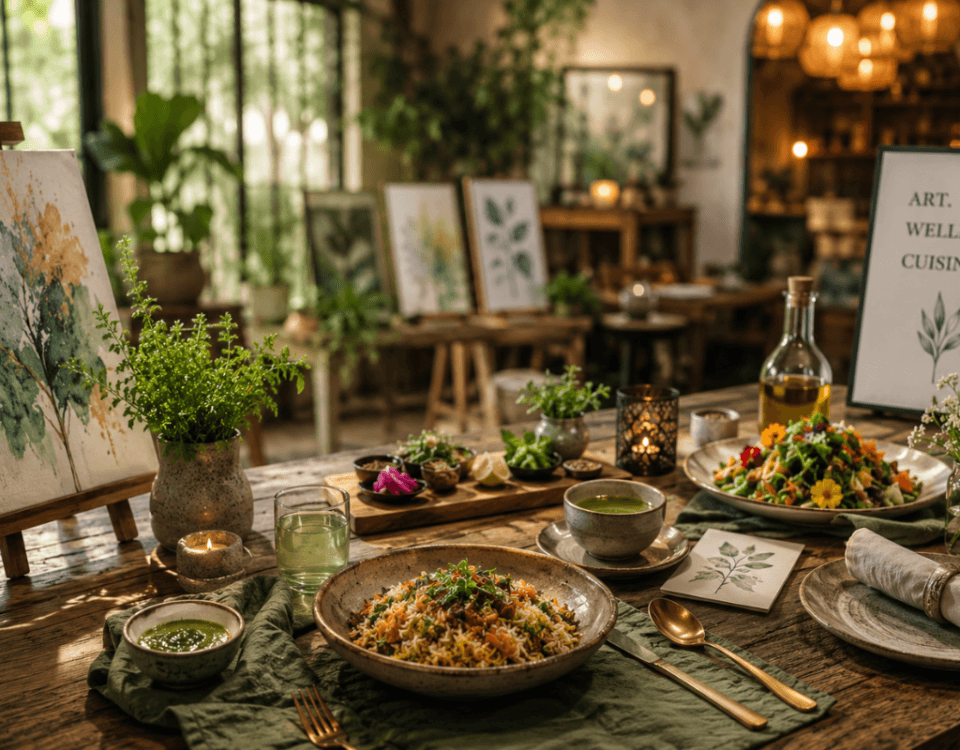
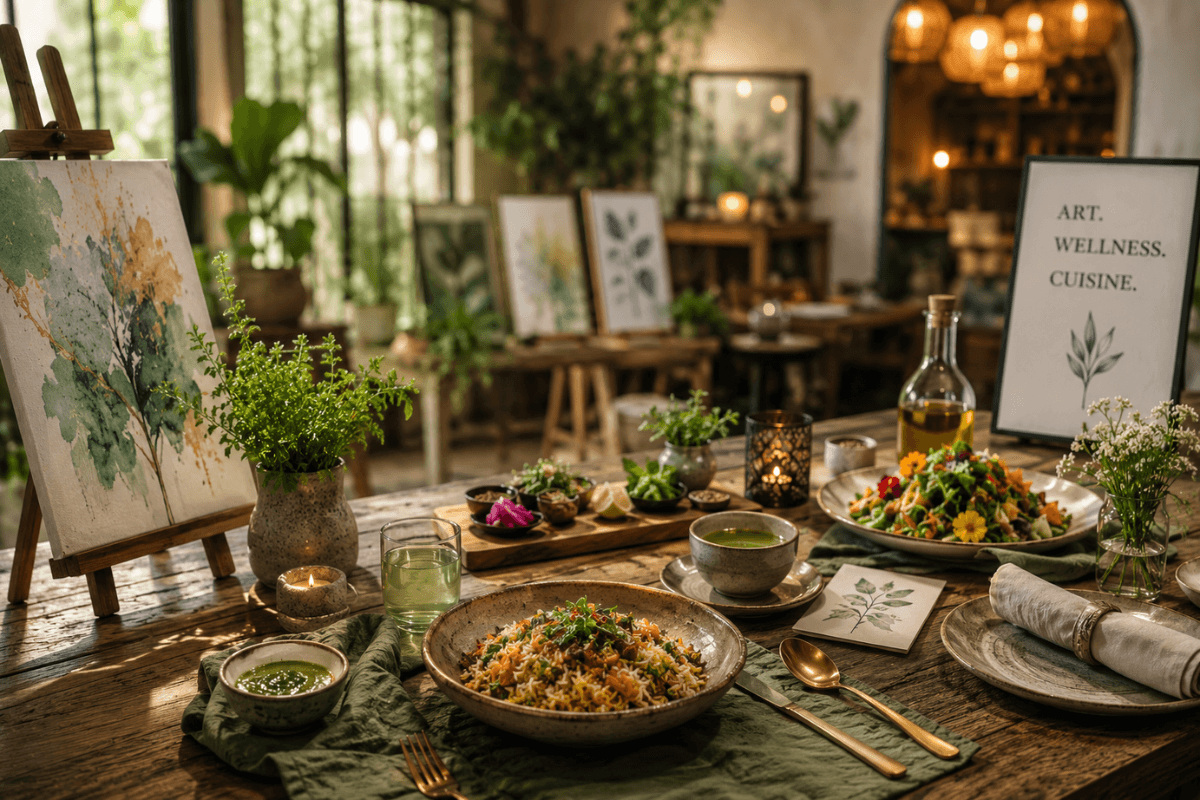
At Herbz en Hues, founder Sweta brings her perspective as an artist to the entire experience. From the colours and textures on the plate to the surrounding visual theme, food presentation is not treated as decoration in isolation.
It becomes part of a broader conversation between cuisine, art, wellness and culture.
Curious what this meeting of art and cuisine could feel like?
Explore Herbz en Hues’ culinary events. Book a themed private dining experience here. Through food, ambience and storytelling.